Literature Review
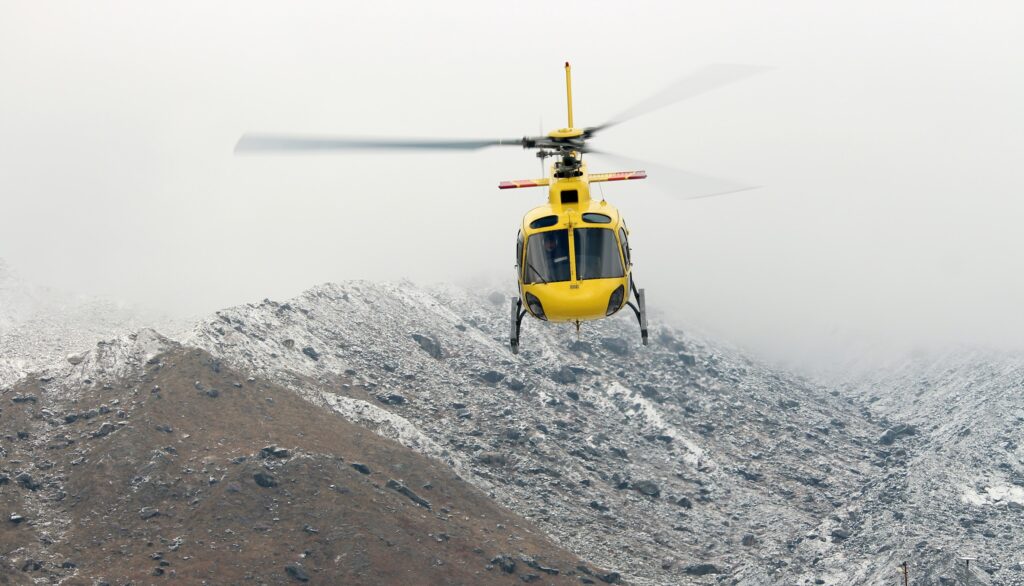
The existing research on helicopter tourism in India mainly falls into three key areas: safety and regulations, economic impacts, and environmental effects. The Directorate General of Civil Aviation (DGCA, 2024) plays a major role in shaping how helicopters operate in the country. Through its safety circulars and advisories, the DGCA outlines rules for managing risks, maintaining aircraft, and ensuring that operators meet required standards.
Accident investigation reports from the Aircraft Accident Investigation Bureau (AAIB, 2023; 2025) add practical evidence to this regulatory framework. These reports show that many helicopter accidents especially in mountainous regions are caused by Controlled Flight Into Terrain (CFIT) and sudden changes in weather, highlighting the challenges of flying in difficult landscapes.
Researchers such as Jagdish Agnihotri and Rajesh Tripathi (2025) focus on the positive side of helicopter services, particularly in Northeast India. Their work shows how helicopters can boost regional development by connecting remote communities and improving economic links. On the other hand, environmental reporting by Mongabay (2025) draws attention to the negative impacts. These include disruptions to wildlife and increased noise levels, especially in fragile Himalayan environments where even small ecological disturbances can have long-lasting effects.
News outlets like the Press Information Bureau (PIB, 2025) and Reuters (2025) provide verified information on major accidents and the government’s responses. Their reports help trace how authorities react to safety failures and how policies evolve after high-profile incidents. Together, these studies and reports offer a broad understanding of helicopter tourism in India its benefits, its risks, and its environmental consequences.